The Pillar Nobody Thinks About
We have come a long way together on this blog.
Pillar 1 — electricity. Secured with a solar power station. Pillar 2 — clean water. Solved with a portable pump water purifier. Pillar 3 — food security. Addressed with a heirloom seed vault.
Today we reach Pillar 4.
And this one surprises people every time.
Cooking.
Not what to cook. Not how to store food.
How to actually apply heat to it — when the gas cylinder is empty and there is no way to refill it.
The Hidden Oil Dependency in Your Kitchen
Most Malaysian households cook with gas.
A cylinder under the stove. A simple flame. A meal on the table.
It feels completely independent of oil prices and supply chains.
It is not.
Liquefied petroleum gas — the gas in that cylinder — is a byproduct of petroleum refining and natural gas processing. It travels from refineries to distribution centres to your local supplier on diesel-powered trucks.
When oil becomes scarce, the entire chain tightens.
Prices rise. Supplies become inconsistent. Refills take longer. And in a serious disruption — the kind we are already beginning to see in other parts of the world — that cylinder under your stove becomes very difficult to replace.
What do you cook with then?
Why a Normal Campfire Is Not the Answer
The instinct is to say: just build a fire.
And in theory, yes. Fire is fire.
But a traditional open fire is deeply inefficient. It consumes enormous amounts of wood. It produces thick smoke that irritates eyes and lungs. It is difficult to control. And it requires a large, open space that most urban and suburban households simply do not have.
There is a reason open-fire cooking was largely abandoned as soon as better options became available.
The better option — even without gas or electricity — already exists.
It is called a rocket stove.
What Is a Biomass Rocket Stove?

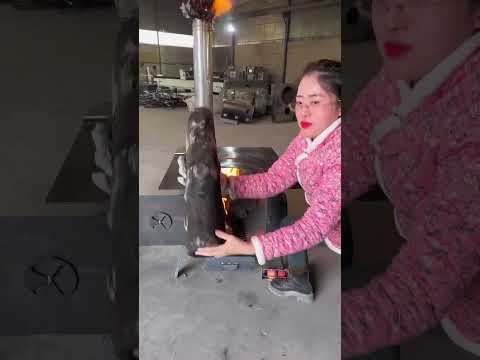
A rocket stove is a cleverly engineered combustion chamber that solves the inefficiency of open fire.
The design channels air in from below and forces it upward through a vertical burn chamber. This creates a concentrated, high-temperature flame — far hotter and more efficient than an open fire — using only a fraction of the fuel.
The rocket stove was invented to use found scrub on the ground — twigs, branches, and biomass — providing the ability to cook for free, eliminating reliance on commercial distribution, reducing emissions, and maximising heat transfer to the cooking vessel.
The result: a hot, controllable cooking flame that runs on whatever dry organic material you can find around you.
Dried twigs. Small branches. Fallen leaves. Wood offcuts. Even coconut shells and dried corn cobs work well in tropical climates like ours here in Malaysia.
No gas. No electricity. No supply chain.
What I Recommend: The Portable Biomass Rocket Stove
I have been looking at affordable, practical options available right here in Malaysia — and this one on Shopee is worth serious attention.
👉 Portable Biomass Rocket Stove — Available on Shopee Malaysia →
Here is what makes it a genuinely smart preparedness purchase:
Burns any dry biomass — twigs, small branches, dried leaves, wood scraps, coconut shells. It lights up quickly and heats up fast, making it versatile for both camp cooking and emergency use. You are not dependent on any purchased fuel. Your fuel source is literally everywhere around you.
Efficient combustion design — the vertical combustion chambers funnel heat directly to the bottom of your pots and pans, reducing heat loss, which results in a much faster and more efficient outdoor cooking experience. You use far less fuel than a traditional open fire to achieve the same result.
Portable and compact — small enough to store in a kitchen cabinet, carry in a bag, or keep in your car. This is not a permanent installation. It goes where your family goes.
Fits standard cookware — your existing pots, pans, and woks sit directly on top. No special equipment required. Cook everything you normally cook — rice, soup, stir fry, boiling water for purification.
Durable construction — made from heat-resistant metal built to withstand repeated high-temperature use. This is not a disposable product. Buy it once and it serves your family for years.
No ongoing cost — once you own it, your fuel is free. Every twig in your garden, every piece of wood offcut, every dried branch from a storm is now cooking fuel.
What Can You Actually Cook With It?
Everything.
If you can cook it on a gas stove, you can cook it on a rocket stove. The flame is real, controllable, and hot.
- Boiling water — for purified drinking water, rice, noodles, soup
- Stir fry — the high, concentrated heat is actually ideal for wok cooking
- Rice — the staple of every Malaysian household, cooked perfectly
- Soups and stews — slow simmer or rolling boil, your choice
- Eggs, fish, vegetables — everyday meals, cooked with nothing but sticks
Whether you need to boil water, stir-fry in a wok, or cook with a Dutch oven, the airflow-optimised combustion chamber delivers consistent high heat and reduced smoke for superior outdoor cooking.
The Thought Experiment
Three days into a serious disruption. The gas cylinder ran out yesterday. The supplier says two more weeks before the next delivery.
Without a rocket stove: your family eats cold food from tins. You cannot boil water safely. Morale drops fast.
With a rocket stove: you step outside, gather a handful of dry twigs from the garden, and have a hot meal on the table in twenty minutes. Rice. Soup. Tea.
Free fuel — biomass twigs and flammable ground scrub — is available all around us, often right under our feet.
That is the difference.
The Four Pillars, Now Complete
We are building a genuinely resilient household. Layer by layer.
Pillar 1 — Electricity: Solar power station. Energy without fuel. Pillar 2 — Clean water: Portable pump water purifier. Safe water from any source. Pillar 3 — Food: Heirloom seed vault. Grow your own, season after season. Pillar 4 — Cooking: Biomass rocket stove. Cook hot meals with nothing but sticks.
Each pillar reinforces the others.
With these four in place, your household can function through most disruptions that are realistically coming in the years ahead — not science fiction, but the kind of slow, grinding supply-chain stress we are already experiencing.
One Small Step
You likely have a gas stove, a lighter, and a full cylinder right now.
Good. Keep them.
But add one layer of resilience this week.
👉 Check the current price on Shopee Malaysia →
It stores in a small space. It costs less than two tanks of gas. And it means that when the next cylinder runs out — whether that is next month or next year — your family still eats hot food that night.
Start small. Build slowly. Stay ahead.
— Peter Ng Post-Oil Survival Guide




No comments:
Post a Comment